What to Do If a Tree Falls on a Power Line
A tree coming down on a power line is loud, fast, and disorienting: a crack or a pop, maybe a flash of light, then the power's out, and there's a tree lying across a wire in your yard. In that first minute, most people freeze between two instincts, get everyone away from it, or go take a closer look and see how bad it is. Only one of those instincts is correct, and getting it wrong can turn a storm cleanup into a hospital visit.
What makes this situation different from an ordinary storm-damaged tree is that it isn't really one problem, it's two stacked on top of each other. There's an electrical hazard that must be neutralized before anyone can safely approach, and there's a downed tree that eventually has to be removed from the property. Those two problems are solved by two different companies, in a fixed order, and most of the confusion homeowners run into afterward comes from not knowing where one job ends and the other begins.
You're Looking at Two Separate Emergencies
The wire is the utility's problem. The tree is not, at least not until the wire is confirmed safe. Utility crews are trained and equipped to de-energize a line, but their job is to make the electrical side safe again, not to cut up and haul away the tree that caused the problem. That part falls to a tree service, and it can't legally start until the utility says the area is clear.
Keeping that division straight changes how you act in the first few minutes, and it's the difference between a homeowner who calls the right people in the right order and one who's still waiting on a tree company that was never going to show up until the power company finished its part.
The First Few Minutes: What to Do Right Now
If a tree has just come down on a line near you, or you can hear it from inside:
- Stay inside if the tree hit your house or the yard where the line runs. Don't go out to "take a look."
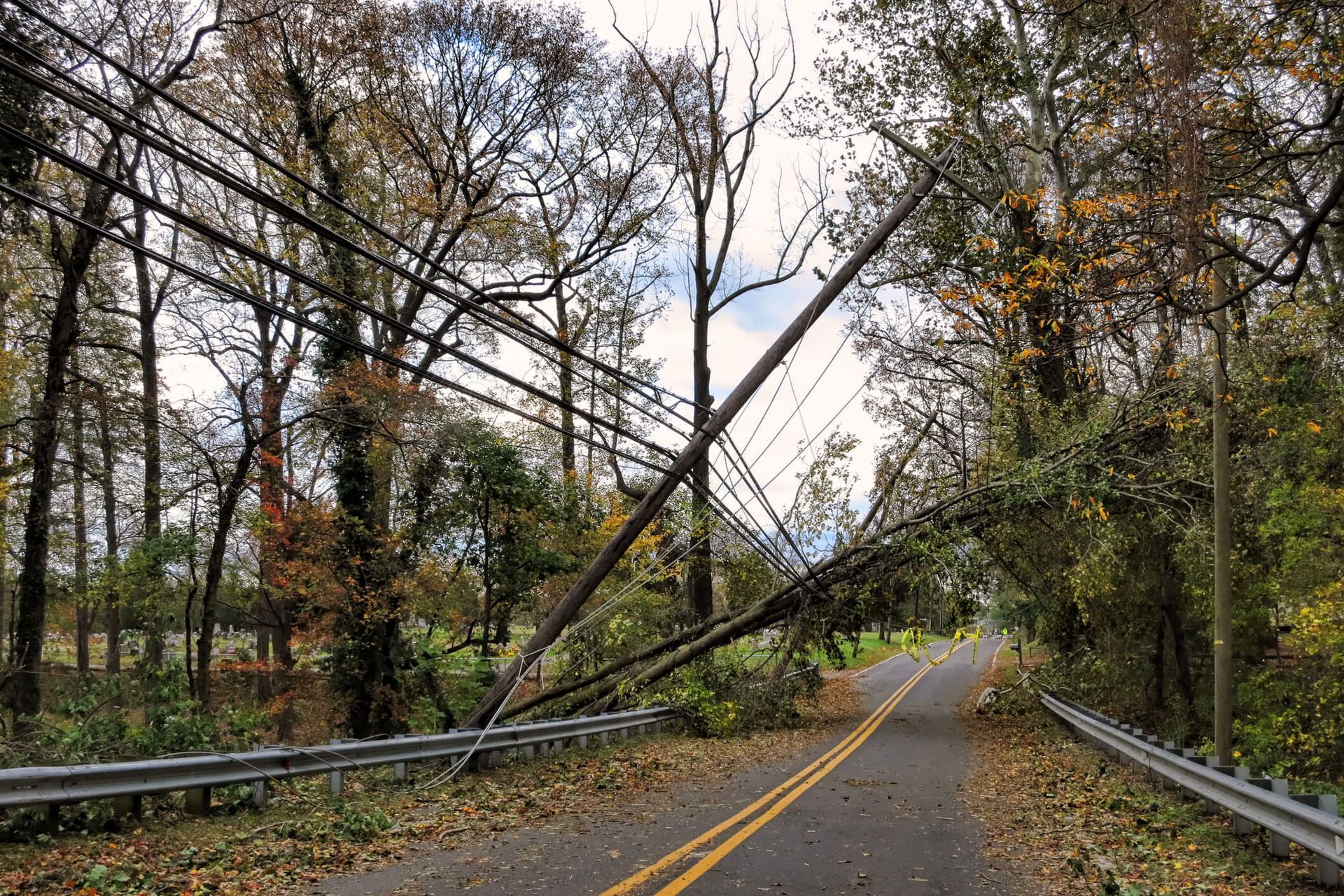
- Assume every downed or sagging line is energized, whether you can see sparks or not. A line can carry a lethal charge with no visible sign it's live.
- Call 911 first if anyone is hurt, if the line is arcing, sparking, or smoking, or if the tree hit a structure with people in it.
- Call your electric utility to report the outage and the downed line separately from any 911 call. Utilities prioritize calls that specifically mention a downed line over general outage reports.
- Keep people, pets, and vehicles at least 10 feet from any part of the tree that's touching the line, and further back if the ground is wet.
According to the Electrical Safety Foundation International, the ground around a downed line can carry a charge for a surprising distance, and stepping into that radius is just as dangerous as touching the line itself.
How to Tell What You're Actually Looking At
Not every "tree on a power line" call looks the same, and it's worth knowing the difference before you decide how urgent your situation is:
The tree snapped the line. You'll usually know from a loud pop, a flash, or a section of wire hanging loose or lying on the ground. Treat this as live and dangerous no matter what.
The tree is resting on an intact line. The wire hasn't broken, but a limb or trunk is now bearing weight against it. This is common after ice or heavy wind, and it looks deceptively calm. The line can still snap or arc without warning, especially as wind or added weight shifts the load, so it gets the same distance and caution as a fully downed line.
A limb is only brushing the line. This is less urgent but not harmless. If you've watched a limb creeping toward a line over several seasons rather than a storm dropping one overnight, that's a maintenance issue worth fixing before it becomes an emergency; our post on how to tell if a leaning tree is dangerous walks through the warning signs.
One thing we tell every homeowner who asks: your power being out inside the house does not mean the line outside is dead. Utilities often only de-energize the specific circuit involved, and even that isn't guaranteed until a crew physically confirms it on site.
Who Handles What, and in What Order
This is the part most guides gloss over, and it's the part that actually determines how your day goes:
- The utility company secures the wire first. They de-energize the line, and if it's their equipment (the service drop, transformer, or pole), they repair or replace it. Nothing else happens until this step is done.
- The utility confirms the area is safe. This is the "all clear," and it's not something a homeowner or a tree crew can determine on their own. Even a downed line that looks dead has to be treated as live until the utility says otherwise.
- A licensed electrician handles your side of the service, if needed. If the tree tore the line off your house, the utility fixes their side and an electrician typically has to reattach the connection at your meter or panel before power is restored.
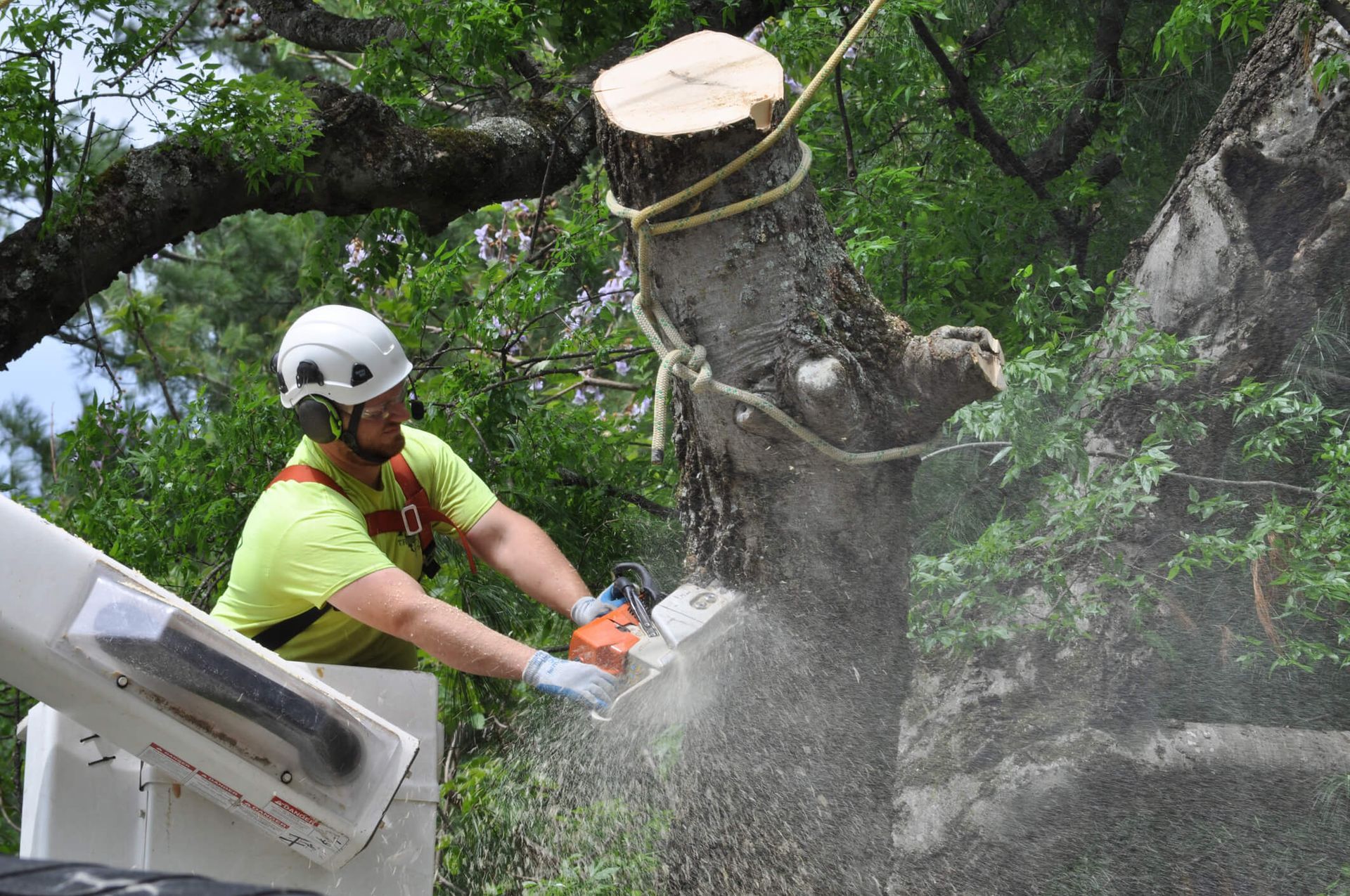
- A tree service removes the tree and clears the debris. This is where we come in. Once the line is confirmed safe, a crew can cut and remove the tree, clear the yard, and assess whether other trees nearby pose the same risk.
Skipping ahead in that order isn't just against the rules, it's how people get hurt. A tree still touching a line, even a de-energized one that hasn't been formally cleared, can shift and re-establish contact the moment a chainsaw starts cutting into it.
Mistakes We See After Almost Every Storm
A few things come up again and again once we're on site cleaning up after a tree-on-a-line event:
- Assuming a line is dead because the power went out. Covered above, but it's the single most common misunderstanding we run into.
- Trying to move or cut the tree "just to get it off the driveway" before the utility clears the line. Even shifting a branch can change tension on a wire that's still energized.
- Using a metal ladder or pole to knock a limb loose. Both conduct electricity, and neither belongs anywhere near a line, live or not.
- Sending a homeowner or a handyman up with a chainsaw instead of a crew trained for line-adjacent work. Our post on why professional tree removal matters covers why this particular job isn't a DIY situation, even for people who are comfortable running a saw.
What Happens Once the Power Is Confirmed Off
Once the utility has de-energized and, if necessary, repaired their equipment, the job shifts to us. A crew will assess how the tree is positioned, whether it's still under tension from the fall, and what order to cut it in so nothing shifts unexpectedly. Storm-damaged trees often aren't a clean, single cut; branches can be under spring tension, the trunk may be partially split, and the root system may be compromised even if the tree looks stable from the ground.
If you've never been through this before, it helps to know roughly what to expect once a crew arrives; our guide on what to expect during emergency tree removal walks through the assessment and removal process in more detail. If the tree that came down was already dead or declining before the storm, it's also worth reading about what happens if you don't remove a dead tree, since a lot of storm damage traces back to a tree that was already a known risk.
Documenting the Damage for Insurance
Before anything is moved, take photos and, if it's safe to do so from inside your home, a short video of the tree, the line, and any damage to your house, fence, or vehicle. Note the time the outage started and when you reported it to the utility. Most homeowners insurance policies cover tree removal when it's tied to storm damage, but claims go smoother when you have a clear record before cleanup starts.
When to Call Us
Once the utility has confirmed the line is safe, or if a tree is threatening a line but hasn't come down yet and you need it handled before the next storm, that's when it's time to bring in a tree crew. Our team at Trees Unlimited | SYS Enterprises provides emergency tree removal in Charlestown, IN and throughout Southern Indiana and the Metro Louisville area, and we've been doing this work for more than 27 years. We coordinate around the utility's timeline rather than working against it, because that's the only order that actually keeps everyone safe.
Frequently Asked Questions
Will the power company remove the tree that fell on the line?
No. The utility's responsibility stops at their equipment: the wire, the pole, the transformer. Removing the tree itself is a separate job for a licensed tree service, and it can't start until the utility confirms the line is safe.
How do I know if a downed power line is actually live?
You can't tell by looking. Sparks, smoke, or a burning smell are signs it's definitely live, but the absence of those signs doesn't mean it's safe. Treat every downed or sagging line as energized until the utility says otherwise.
What if the tree is just leaning on the line but hasn't broken it?
Keep the same distance and caution as you would for a fully downed line. An intact line under added weight from a leaning tree can still arc or snap without warning as wind, rain, or additional weight shifts the load.
How long does it usually take to get power restored?
It depends entirely on the extent of the damage and how many other outages the utility is handling at the same time. A single service drop can sometimes be repaired within hours, but widespread storm damage across a service area can take much longer.
Can I call a tree service before the power company arrives?
You can call to get on the schedule, but the crew won't cut into or move any part of the tree until the utility has confirmed the line is de-energized and safe. Calling early means you won't have to wait for a callback later.
Is a tree that fell on a line but didn't spark still dangerous?
Yes. A line doesn't have to visibly arc to be carrying a lethal current. No sparks doesn't mean no danger.
You might also like