How Deep Does Stump Grinding Go?
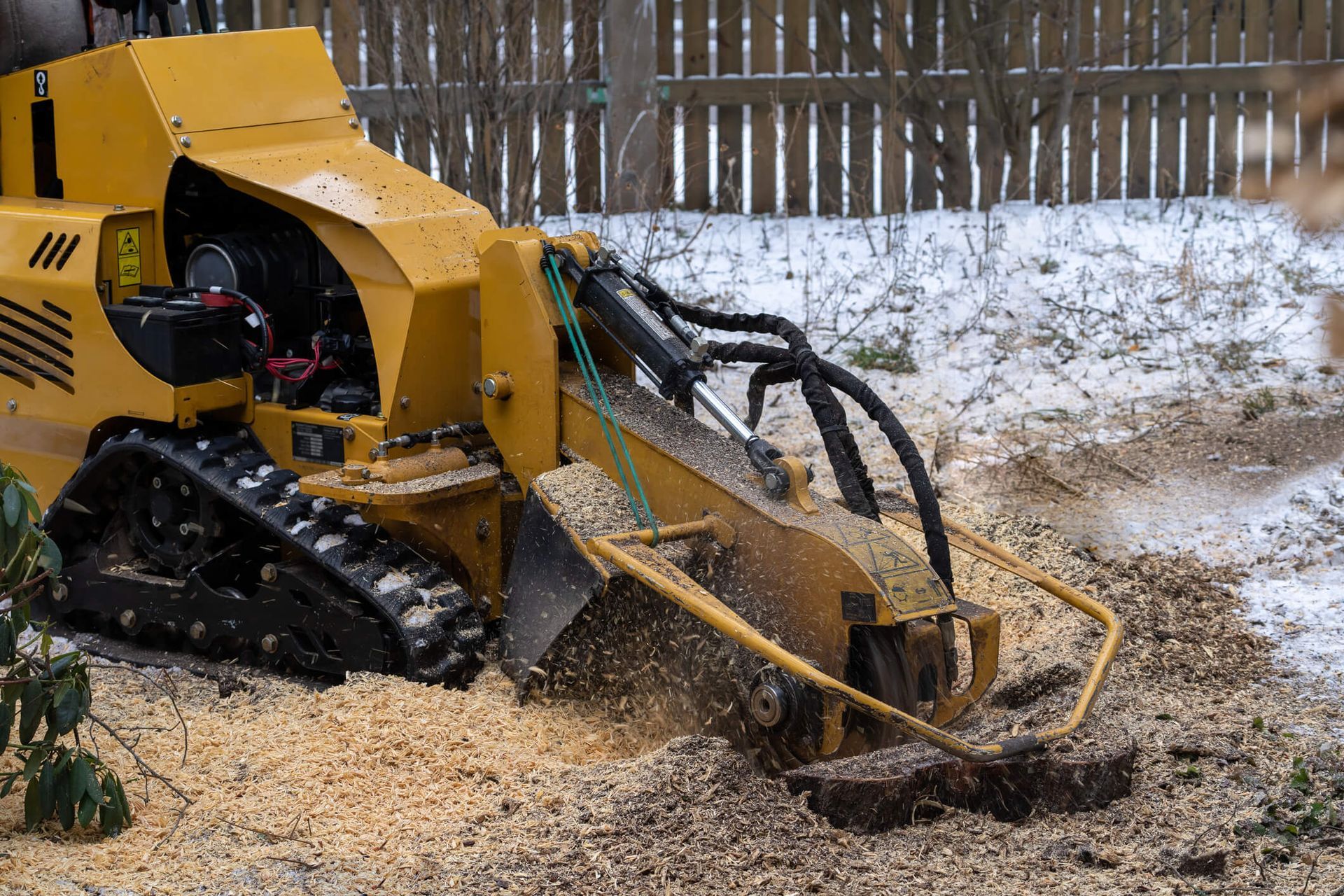
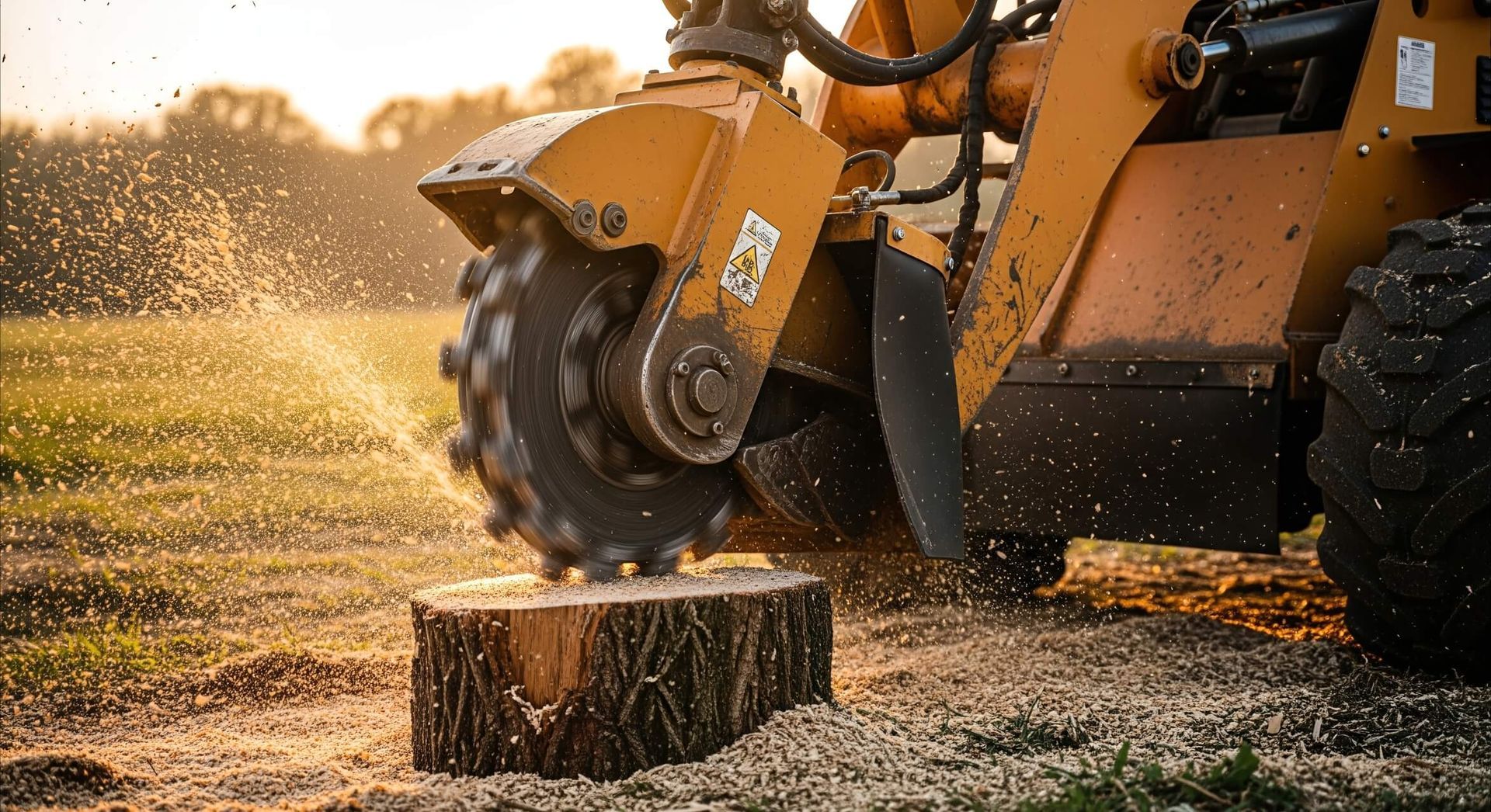
Stump grinding removes a tree stump by grinding it into wood chips below ground level. How deep the grinder goes depends on the job, but most residential stumps are ground several inches below the soil line.
Most stump grinding goes about 6 to 12 inches below the ground, which is enough for a lawn. This guide explains how deep stump grinding goes, how to choose the right depth, and what to do afterward.
The Short Answer: It Goes as Deep as the Job Needs, Not as Deep as the Machine Can
Grinding depth is measured below grade, meaning below the surrounding soil line, not below the top of the stump. A stump cut at ground level that is ground 8 inches deep has been ground 8 inches below the soil. Because deeper grinding takes more time and leaves more wood chips, crews generally stop at the depth the job calls for. That is why the question to ask is not "how deep can you go?" but "how deep do I need?"
What Machines Can Actually Reach
The equipment sets the outer limit. Portable and walk-behind grinders commonly cut somewhere around 8 to 16 inches below grade, and rental units are often in the 12-inch range. Larger tracked machines go deeper: Vermeer's SC652 and SC1152 stump cutters are rated for cutting 25 inches below grade. In practice, buried rocks, metal, and utility lines, along with the stump's width, can limit how far a crew can go.
For a plain-language explanation of the process itself, see our post on what stump grinding is.
How Deep You Need to Go, Based on What's Going There
| What is going in the spot | Depth to ask for | Notes |
|---|---|---|
| Lawn (seed or sod) | A standard grind, commonly about 6 to 12 inches | Remove chips, add topsoil, and mound slightly for settling. |
| Flower bed or garden | Standard depth or a little deeper | Add enough topsoil that plant roots are not sitting in wood chips. |
| A new tree in the same spot | A deeper grind, with chips and root fragments removed | Many arborists suggest planting a few feet away instead. |
| Patio, walkway, shed, or foundation | Deeper than standard, or full stump removal | Tell the crew before the quote, and talk to your contractor. |
Wood buried under pavement or a slab will decay and settle over time, so building over a ground stump is the one case where standard depth usually is not enough. If a new tree is going in, note that Purdue Extension points out the former stump location can have limited soil and rooting depth because of the wood that remains below ground.
Why the Roots Stay, Whatever the Depth
Grinding takes out the stump and the largest roots right at the base. It does not remove the whole root system. An Extension answer on this topic notes that stump grinding does not remove all roots, and some of the ones left behind can be several inches wide. Those roots decay over the years, and the ground above them can settle as they do. Plan to top off the area with soil from time to time, and don't treat depth as the same as full root removal.
Why Not Always Go as Deep as Possible?
- Time and cost: a deeper grind takes longer and produces more chips. Our guide to what affects stump grinding cost explains how depth fits into a quote.
- Buried utilities: in Indiana, removing a stump counts as a digging project. Contact Indiana 811 at least two full working days before the work so lines can be marked, since deeper grinding brings the cutter closer to anything buried.
- Obstacles: irrigation lines, invisible pet fences, and cables can all sit within the depth range, so a shallower grind is sometimes the safer choice near them.
- Nearby structures: close to a foundation, septic system, or walkway, a crew may limit depth to avoid damage.
- Cleanup: more depth means more chips to haul or spread.
How to Make Sure You Get the Depth You Asked For
- Tell the company what is going in the spot before you get a quote.
- Ask for the depth in inches below grade, and get it in writing.
- Ask what happens to the wood chips, and whether they are left or hauled away.
- Ask about marked utilities and anything buried that could change the plan.
- Check the result. After the grind, you can probe the area with a rod or shovel to see how far the chips extend, and ask the crew to show you if you are unsure.
What to Do After the Grind
The spot you are left with is a pile of chips and a depression. Iowa State Extension advises that after stump grinding, wood chips and root fragments should be removed as thoroughly as possible before planting grass, then topped with quality topsoil, mounded slightly to allow for settling. Our guide on what to do after stump grinding walks through the cleanup. If you are deciding how soon the work can happen, read how soon you can grind a stump after tree removal.
Need a Stump Ground to the Right Depth?
SYS Enterprises provides stump grinding in Charlestown, IN and serves Southern Indiana and Metro Louisville. Tell us what is going in the spot, and we will recommend a depth. Call (502) 724-6950 or contact us online. The office is open Monday through Friday, 6:30 am to 5:00 pm.
Frequently Asked Questions
How deep should a stump be ground for grass?
A standard grind is usually enough. After grinding, remove the wood chips, add topsoil, and mound the area slightly so it can settle.
Can a stump be ground 24 inches deep?
Some large machines are rated for that, but it is not common for residential jobs. Deeper grinding takes more time, produces more chips, and brings the cutter closer to buried utilities, so it is usually done only when a project requires it.
Does stump grinding remove the roots?
Not all of them. Grinding removes the stump and the largest roots near the base, but other roots stay in the ground and decay over the years, which can cause settling.
Can I plant a tree where a stump was ground?
It is possible, but it is not ideal. Remaining wood and roots can limit rooting space, and the area needs preparation, so many arborists suggest planting a few feet away.
Do I need to call 811 before stump grinding?
In Indiana, yes. Stump removal counts as a digging project, and you should submit the request at least two full working days before the work begins. It is free, and your tree service can tell you who will place it.
You might also like