Tree Removal Safety: Why Professional Tree Removal Matters
The tree in question looks straightforward. It leans away from the house. There's an open yard behind it. You have a chainsaw and a Saturday afternoon. This is the setup for the majority of DIY tree removal injuries we've seen in 27 years of tree work in Southern Indiana and Metro Louisville, because the jobs that look simple often aren't, and the ones that go wrong do so fast.
This post is not a list of generic reasons to hire a professional. It's an explanation of what a professional crew actually does differently on a tree removal, why those differences exist, and what the practical consequences are when a removal goes wrong without them.
What a Professional Crew Does That a Homeowner Cannot
The gap between a homeowner with a chainsaw and a professional tree crew isn't primarily about equipment, though equipment matters. It's about the site assessment that happens before any saw comes out.
A trained tree crew evaluates a removal job the way a structural engineer evaluates a building: looking for things that aren't visible on the surface. That means checking the tree's root system for signs of decay that affect stability, assessing the canopy's weight distribution to determine where the center of mass actually falls versus where it appears to fall, identifying dead wood in the upper canopy that will come loose during the removal (sometimes called widow-makers in the trade), and evaluating the condition of the bark and wood at the base for internal rot that can cause unpredictable splitting during the cut.
Most homeowners skip this assessment entirely, not because they're careless, but because they don't know what they're looking for. A tree can look perfectly healthy from the ground and have significant internal decay at the structural root zone. A canopy that appears to lean one way can have its center of mass somewhere entirely different because of branch weight on the opposite side. The assessment determines the approach; the approach determines whether the removal goes where you planned.
The Equipment Gap Is Real
The chainsaw is the visible piece of equipment, but it's not the limiting factor in a complex removal. What professional crews carry that most homeowners do not:
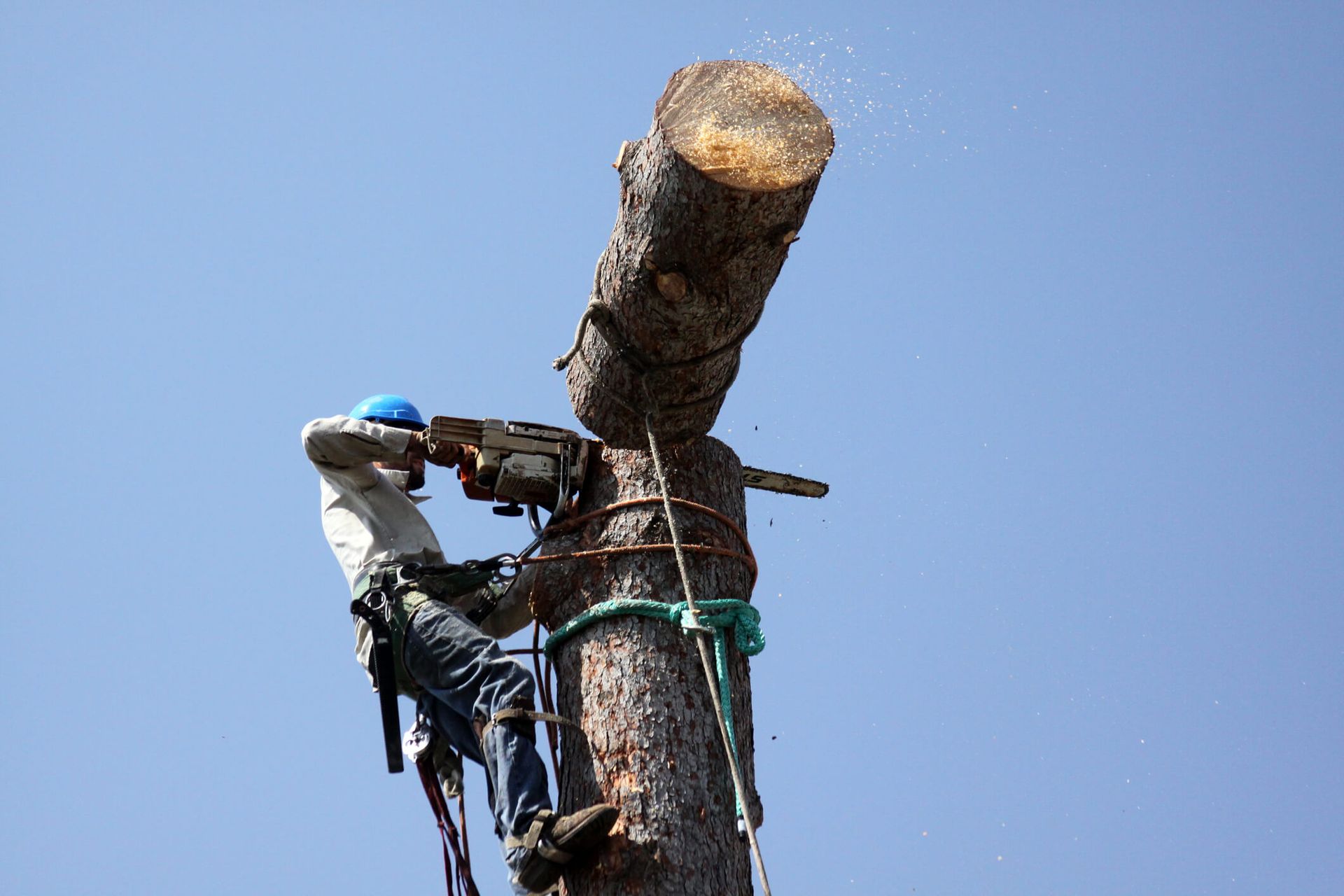
Rigging systems. On any removal where the tree cannot free-fall in a clear zone equal to at least its own height, professionals use directional rigging: a system of ropes, blocks, and lowering devices that allows sections of the tree to be cut and lowered in a controlled direction, not dropped. Without rigging, a large section cut from a tree in a constrained space will fall where physics takes it, which is rarely exactly where you intended.
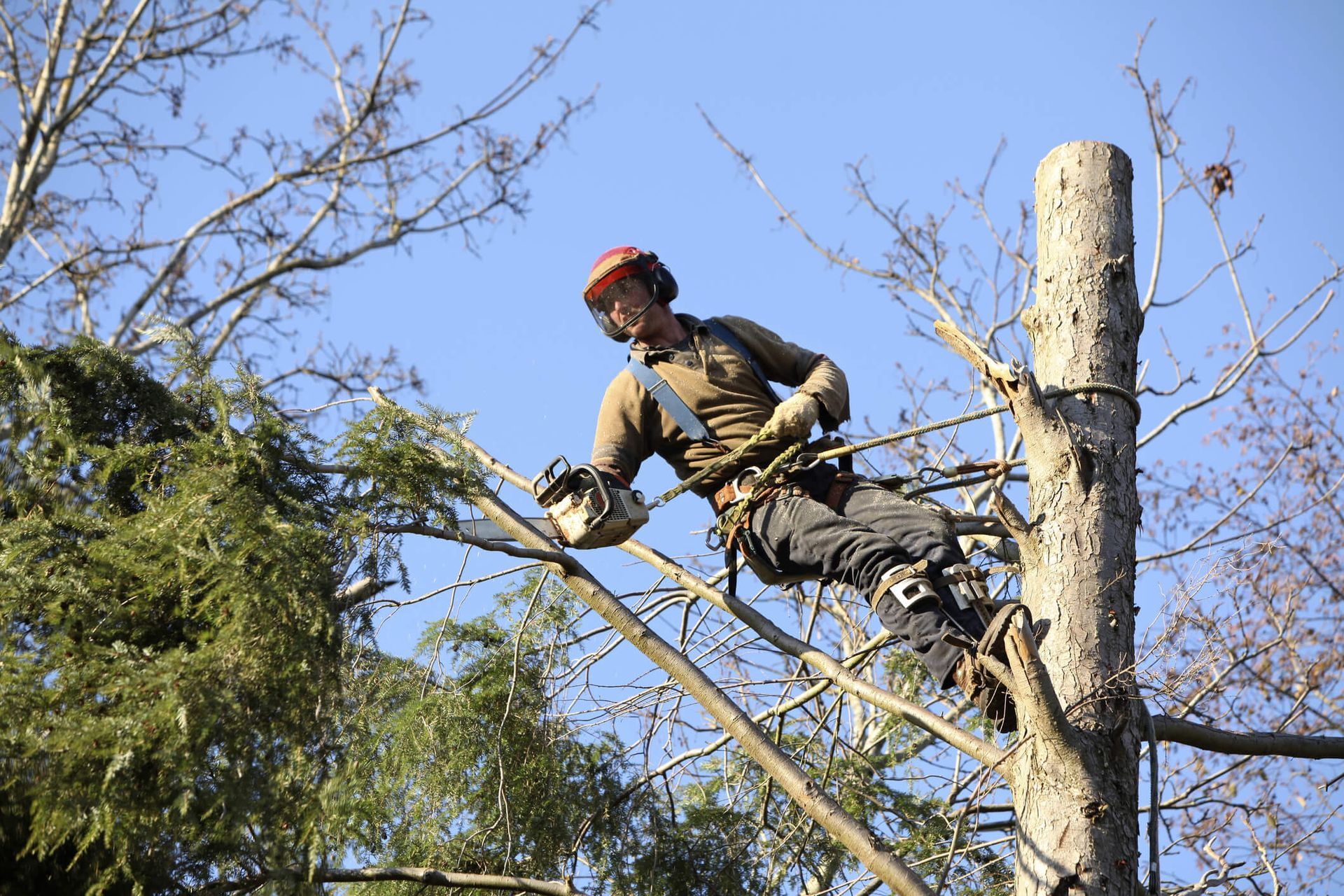
Proper PPE. The Occupational Safety and Health Administration (OSHA) sets specific equipment requirements for professional tree workers: chainsaw-resistant chaps, helmets with integrated face shields and hearing protection, cut-resistant gloves, and steel-toed boots with cut-resistant uppers. These aren't optional add-ons; they're the minimum standard for safe chainsaw operation. Chainsaw chaps, specifically, feature layers of cut-resistant material that jam the drive sprocket and stop the chain in a fraction of a second upon contact. Standard clothing does not.
Climbing and aerial access. Large trees, trees close to structures, and trees with compromised root systems often cannot be safely felled from the ground. Professional crews are trained and equipped for sectional removal from above, working in sections from the top down, with each piece rigged before it's cut. This approach removes the tree in a controlled sequence rather than all at once.
Power Lines: What Homeowners Usually Don't Know
Trees near power lines are almost universally cited as a reason to hire a professional, but the advice usually stops there. Here's what that actually means in practice.
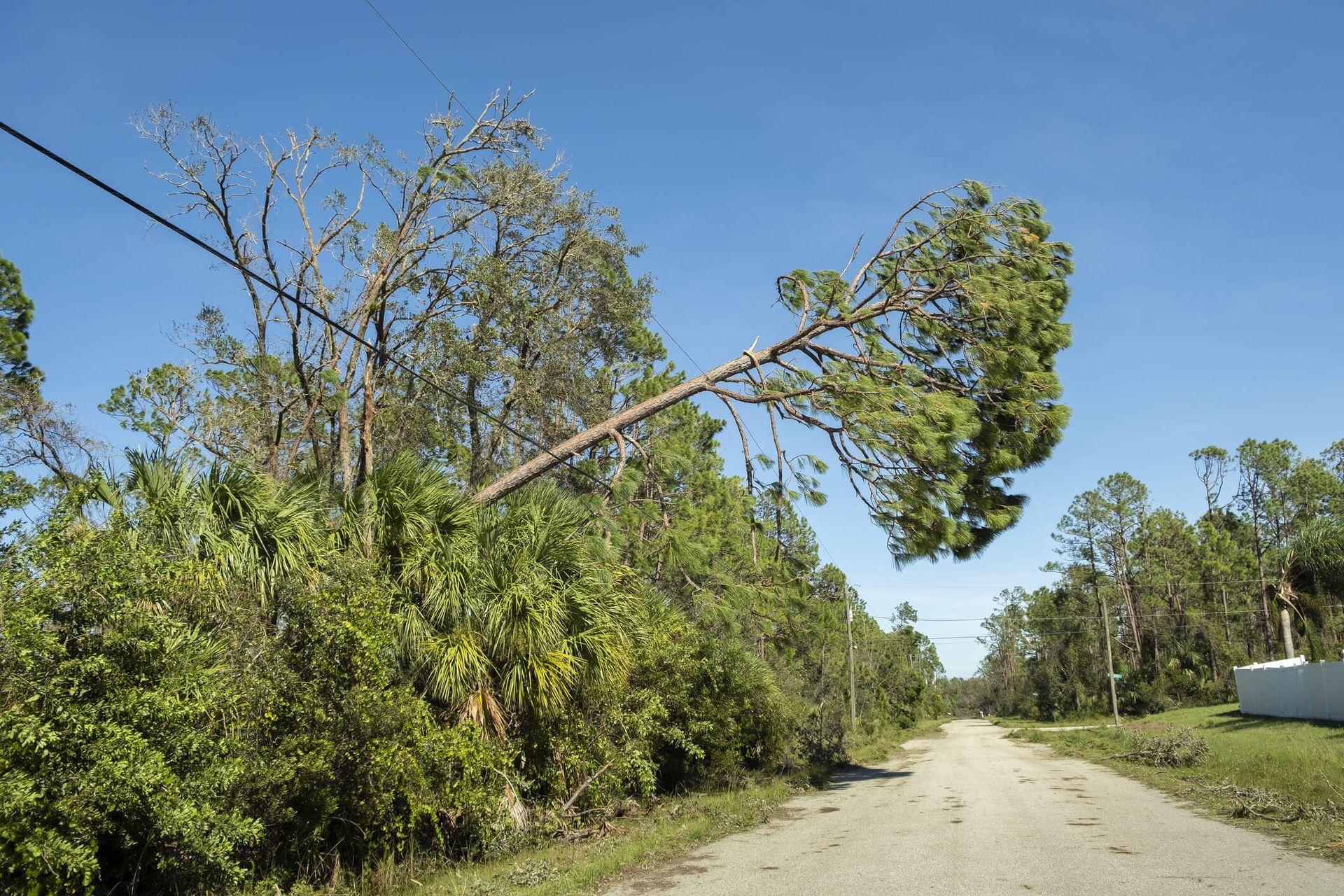
There are two types of lines that may run near a tree on your property. The main distribution lines, owned and maintained by the utility company, are typically higher and run between poles. The service drop is the lower line that runs from the pole or transformer to your home's meter. Most homeowners are surprised to learn that vegetation management around the service drop is the homeowner's responsibility, not the utility's. If a tree on your property contacts your service drop, you're responsible for addressing it, and doing so without proper equipment or training around energized lines creates an electrocution risk that isn't mitigated by simply staying away from the line while cutting.
For any tree within falling or branch-dropping distance of any power line, the right call is a professional crew. For vegetation that has already contacted distribution lines, the utility company needs to be involved before any work begins. Do not cut anything that could contact an energized line during its fall.
What Happens When a DIY Removal Goes Wrong
This is the part most articles skip, and it's the most practically important argument for professional removal.
First, the physical consequences: a tree falling in the wrong direction, or a large limb coming down unexpectedly, can damage a structure, a fence, a vehicle, or a person. A chainsaw kickback, the sudden upward rotation of the bar when the tip contacts wood, happens in a fraction of a second, faster than any human reflex can respond. According to the Consumer Product Safety Commission (CPSC), chainsaw-related injuries send tens of thousands of people to emergency rooms each year in the United States.
Second, the financial and liability consequences: standard homeowner's insurance policies typically cover damage caused by a tree falling on your property from a storm or other natural event. They do not reliably cover damage caused by a tree removal that you performed yourself, and that resulted in property damage due to error or negligence. If your DIY removal damages your neighbor's fence, vehicle, or structure, you may be personally liable for that damage out of pocket or face a coverage dispute with your insurer. A licensed and insured professional tree service carries its own liability insurance and is responsible for damage that occurs during the job.
When DIY Is and Isn't Reasonable
We give the same honest guidance here that we give in our post on what not to do when cutting down a tree: small trees in open yards with clear fall zones and no nearby structures are a reasonable DIY project for someone with proper equipment and basic felling knowledge. The line is drawn at anything within falling distance of a structure, a power line, or another tree the falling tree could hang up in; anything dead, diseased, or leaning the wrong way; and anything large enough that a single mistake cannot be corrected.
Over 27 years of tree work in Charlestown and across Southern Indiana and Metro Louisville, the jobs we get called in to handle after a DIY attempt went wrong are almost always ones that crossed at least one of those lines. The pattern is consistent: the job looked manageable until it wasn't, and by that point, the options for a controlled outcome were gone.
If you have a tree you're not certain about, the right first step is a professional assessment, not a chainsaw. At Trees Unlimited / SYS Enterprises, we've been assessing and removing trees in this area since the late 1990s. For a quote on a removal, trimming, or emergency tree removal in Southern Indiana, call us at 502-724-6950 or reach out through our contact page.
Frequently Asked Questions
Is tree removal dangerous for homeowners?
Yes, significantly so. Tree removal combines chainsaw operation, heavy falling objects, potential height work, and the unpredictability of large tree sections under tension, all at once. The Consumer Product Safety Commission reports tens of thousands of chainsaw-related emergency room visits each year in the United States. Most tree removal fatalities and serious injuries occur during recreational or homeowner tree work, not professional operations, precisely because professional crews use rigging, PPE, and site assessment protocols that most homeowners skip.
What makes professional tree removal safer than DIY?
Three things primarily: a thorough pre-cut site assessment that identifies hazards a homeowner typically cannot recognize, rigging equipment that allows large sections to be lowered in a controlled direction rather than free-falling, and proper PPE, including chainsaw-resistant chaps that can stop a chain in a fraction of a second on contact. Professional crews also work in trained teams where one person's job is to watch for hazards the cutter cannot see from ground level.
Does homeowner's insurance cover DIY tree removal damage?
Not reliably. Standard homeowner's policies generally cover damage caused by falling trees due to storms or other natural events. Damage caused by a homeowner's own tree removal attempt, particularly if the insurer determines the removal was performed negligently or without proper precautions, may not be covered. A licensed and insured professional tree service carries its own liability coverage and assumes responsibility for damage that occurs during the job. This is one of the most practical and underappreciated reasons to hire a professional.
How do I know if a tree needs to be removed by a professional?
Any tree within falling distance of a structure, power line, fence, or neighboring property should be handled by a professional. The same applies to dead or diseased trees (which behave unpredictably during cutting), trees with a heavy lean toward a structure, and any tree large enough that a single mistake in the cut cannot be corrected. When in doubt, the right call is a professional assessment before any cutting begins, not after.
What should I look for when hiring a tree removal company?
Verify that the company carries liability insurance and workers' compensation coverage before any work begins. Ask to see certificates of insurance, not just a verbal confirmation. A company with proper coverage will have no hesitation in providing documentation. Beyond insurance, look for a crew that performs a visible site assessment before quoting the job, not one that arrives and starts cutting immediately. Experience with the specific type of removal you need (close to a structure, near a power line, large diameter trunk) is also relevant; ask whether the crew has handled similar jobs before.
You might also like