Never Do This When Cutting Down a Tree
Every tree-felling accident we have seen in over 27 years of tree work in Southern Indiana and Metro Louisville followed a version of the same script. It wasn't one catastrophic mistake. It was two or three small ones that stacked on top of each other before the homeowner had time to react.
The dangerous thing about cutting down a tree isn't that it's complicated. It's that it looks straightforward right up until it isn't. The cuts are simple enough. The hazard is that a tree weighing several thousand pounds doesn't care about your plan, and once it starts moving, you have seconds, not minutes.
What follows isn't a list of abstract rules. It's a description of how the mistakes actually connect, and what happens when they do.
How Tree Felling Accidents Actually Happen
The pattern usually starts before the saw even comes out. Someone walks up to a tree, looks at which way it leans, and decides that's where it will fall. That's the whole plan. No marked escape route. No check of the overhead canopy. No look at what's within the fall radius on the ground.
Then they start cutting.
The tree leans the way they expected, which feels like confirmation they were right. What they didn't see was the dead branch, forty feet up, that got knocked loose when the trunk started moving. It came straight back down into the area where they were standing. This hazard has a name in the tree-felling trade: a widow-maker. Experienced crews know to clear the area of deadwood before any cut is made, and to move away from the tree along a planned escape path the moment the felling cut is complete, not after the tree has fully fallen.
Most articles about tree-cutting mistakes give you a list of things to avoid. That's useful. But what actually protects you is understanding that these mistakes rarely appear alone. Here is how they cluster.
The Cluster That Kills: Skip One, Risk the Next
Not Assessing the Tree Before You Touch a Saw
Before any cut: walk the full circumference of the tree. Look up. You're checking for three things: the natural lean (which direction the center of mass wants to go), the condition of the canopy (any large dead branches that could fall during or after felling), and everything within a distance equal to at least twice the tree's height in every direction. That last step is the fall zone. Nothing you care about, including yourself, should be inside it when the tree comes down.
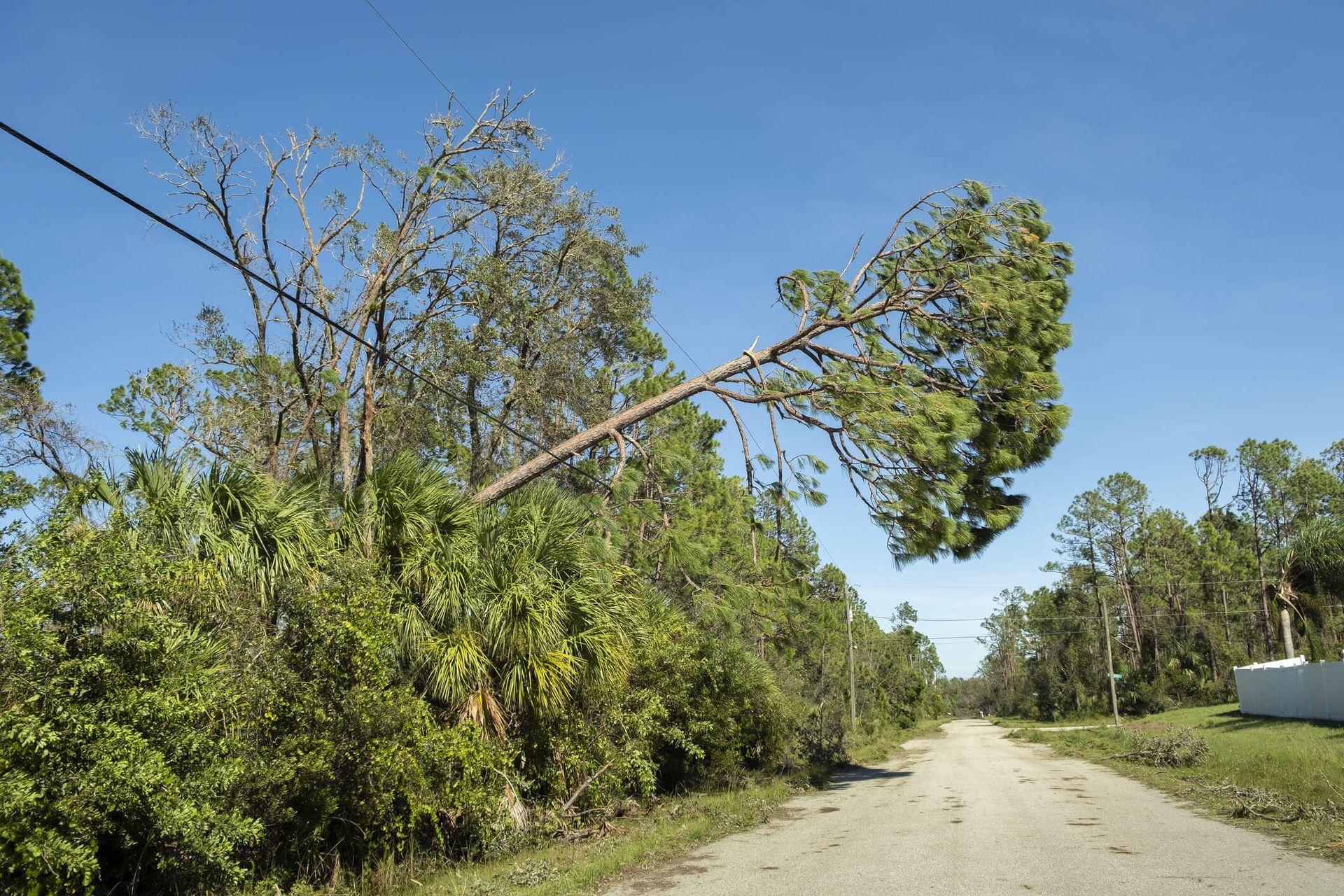
If the tree leans toward a structure, a fence, a power line, or another tree it could hang up on, stop here. This is where DIY ends and professional rigging begins. A tree that gets hung up in another tree (sometimes called a "widow-maker" or a "barber chair" situation, depending on how the trunk splits) is extraordinarily dangerous to deal with and has killed experienced loggers. It is not a problem that can be solved with a longer rope and more effort.
Skipping the Escape Route
Your escape route is not "backing away from the tree." It is a specific path, cleared of debris and obstacles, at roughly a 45-degree angle behind and to the side of your planned fall direction, and you plan it before you make the first cut. The moment your felling cut is complete, you take three or four deliberate steps along that path and do not look back at the tree until you are clear.
The reason for the angle is that a tree doesn't always fall cleanly in the intended direction. The back end of the trunk can kick back toward the sawyer when the hinge releases. Standing directly behind the cut is one of the most dangerous positions you can be in during the final moments of the fall.
Wearing the Wrong Gear, or No Gear at All
Generic safety advice says "wear protective equipment." Here is what that actually means and why each piece matters:
Chainsaw chaps or pants contain layers of cut-resistant fabric, typically Kevlar or similar material, designed to jam the chainsaw's drive sprocket if the chain makes contact with your leg. The chain stops in a fraction of a second. Without them, a chainsaw running at full speed against unprotected denim produces a severe laceration in roughly the same fraction of a second. The Occupational Safety and Health Administration (OSHA) requires chainsaw chaps for professional chainsaw operators. There is no good reason not to wear them for DIY work.
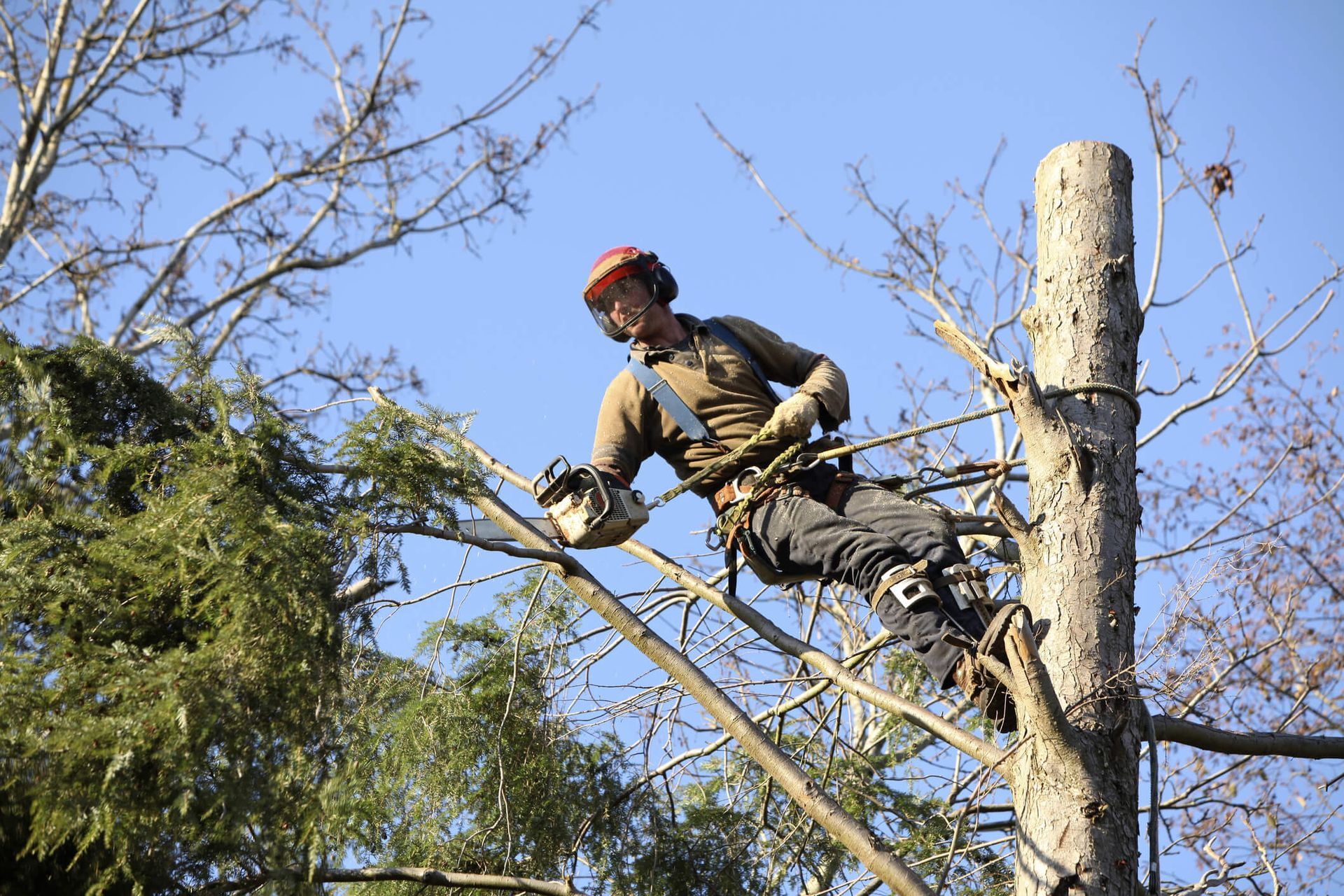
A chainsaw helmet with integrated face shield and hearing protection is different from a standard construction hard hat. It is designed to protect against falling debris from above, not just lateral impacts, and the integrated face shield protects against the wood chips and debris a chainsaw generates at close range. Standard safety glasses alone are not a substitute.
Steel-toed boots with a cut-resistant upper, work gloves with grip, and snug-fitting clothing with no loose drawstrings or fabric that can catch a chain complete the picture.

Working Alone
Have a second person present, positioned well outside the fall zone, whose only job is to watch the tree from a distance and warn you if something is happening above that you cannot see from ground level. They are not there to help with the cut. They are there to be your eyes on the parts of the tree you cannot see while you are focused on the saw.
Using a Dull or Overmatched Saw
A dull chainsaw chain doesn't cut cleanly; it deflects and binds. A saw that's too small for the tree's diameter requires more cuts, more repositioning, and more exposure time to a partially cut trunk already under tension. If the bar of your saw is shorter than the diameter of the trunk, you are making multiple plunge cuts to get through, and that significantly increases kickback risk. Chainsaw kickback, the sudden upward rotation of the bar when the tip contacts wood unexpectedly, is the leading cause of serious chainsaw injuries and happens faster than a human reflex can respond to it.
Cutting in Wind or Bad Weather
Wind changes a tree's fall direction. Even a modest breeze exerts meaningful force on a canopy containing hundreds of square feet of leaf surface area, and that force can overcome a carefully planned notch and hinge. A general guideline: if the wind is strong enough that you can see branches moving consistently, it is too strong to be felling trees. Wet conditions add a separate hazard: slippery footing during the escape route is exactly the wrong moment to lose your balance.
When to Call a Professional Instead
The honest answer to "can I cut this tree down myself?" depends on a few concrete factors:
- If the tree is within falling distance of a structure, a power line, a fence, or anything you can't afford to damage: call a professional.
- If the tree is dead, diseased, or heavily leaning in an undesirable direction: call a professional. Dead wood is unpredictable; it can split, shed large sections, or fall in an unplanned direction with no warning.
- If the trunk diameter is larger than the bar length of your saw: seriously reconsider.
- If you have never felled a tree before and the tree is taller than a single story, this is not the project to learn on.
For a straightforward small tree in an open yard with a clear fall zone and no obstacles, an experienced and careful homeowner with the right equipment can handle it safely. The operative words are "right equipment" and "clear fall zone."
For everything else, the cost of professional tree removal is almost always less than the cost of what goes wrong when it isn't. If you're in Southern Indiana or the Metro Louisville area and you want an honest look at a tree on your property, our tree removal team in Southern Indiana at SYS Enterprises has been doing this work for over 27 years. Give us a call at 502-724-6950 or reach out through our contact page.
Frequently Asked Questions
Is it safe to cut down a tree yourself?
It depends entirely on the tree and the situation. A small, healthy tree in an open yard with no structures or power lines nearby, and an operator who has proper PPE and understands basic felling technique, is a reasonable DIY project. A large tree, a dead or diseased tree, anything near a structure or power line, or a tree with an undesirable lean should go to a professional. The consequences of getting it wrong scale quickly with tree size.
What is a widow-maker in tree cutting?
A widow-maker is a dead or partially attached branch in the canopy of the tree being felled, or in nearby trees, that gets dislodged when the trunk moves and falls back into the work area. It's called a widow-maker because it can be fatal and arrives without warning. Experienced crews inspect the canopy thoroughly before any cut and use a planned escape route to get clear of the tree the moment the felling cut is complete.
Do I need chainsaw chaps to cut down a tree?
Not legally for personal use, but practically speaking, yes. Chainsaw chaps are designed to stop a chainsaw chain in a fraction of a second on contact with your leg. The alternative is a wound that a standard pair of jeans offers essentially no protection against. OSHA requires them for professional chainsaw operators. For DIY work, the cost of a pair of chainsaw chaps is trivial compared to the injury they prevent.
What direction does a tree fall when you cut it down?
A properly felled tree falls in the direction determined by the notch cut on the front of the tree, modified by the tree's natural lean and the position of the heaviest part of the canopy. The notch creates a hinge; the felling cut from the back releases that hinge, and the tree falls into the notch. Wind, uneven canopy weight, internal decay, and errors in the notch angle can all cause the tree to deviate from the planned direction, which is why the escape route and fall zone are assessed before the first cut, not after.
How close to a house can you safely fell a tree?
If the tree's height is greater than the distance between the base and the structure, the tree could reach the structure in a fall, even accounting for the planned direction. Any situation where the fall zone overlaps with a structure is a job for professional rigging, not standard felling. A professional can use directional rigging or sectional removal to bring the tree down in sections without a free fall.
You might also like