How Soon Can You Grind a Stump After Tree Removal?
Most people assume a fresh stump needs time to dry out or settle before a grinder can touch it. It doesn't. What actually decides how soon a stump can be ground has almost nothing to do with the stump itself, and it's worth knowing before you schedule anything, because the real answer involves a legal requirement most guides on this topic never mention.
The Short Answer
A stump can often be ground the same day as tree removal, or within a day or two after, as long as the site is clear and accessible for the grinder. Stump age isn't the limiting factor; a stump ground the day the tree comes down and a stump ground a year later grind about the same. The real timeline usually comes down to two things: whether the site is actually ready for the equipment, and, in Indiana and Kentucky specifically, whether the required utility locate window has passed.
You Don't Need to Wait for the Stump Itself
A common assumption is that a stump has to dry out before a grinder can work through it efficiently. In practice, that's not really true. Fresh-cut stumps and stumps that have been sitting for months both grind down without much difference in effort. What does vary is the wood species and the size and spread of the root system, not how long the stump has been sitting there. If someone tells you a stump needs to age before it's ready, that's generally not a real mechanical requirement.
What Actually Sets the Timeline
Once the stump itself is ruled out as the limiting factor, the practical questions become:
- Is the site clear? A grinder shouldn't be working around leftover brush, trunk sections, or rigging debris from the removal.
- Can the equipment reach the stump? Removal equipment can leave a yard chewed up in spots, and the path a grinder needs may need to be reassessed before work continues.
- Are the same crew and equipment already on-site? Grinding a stump right after removal, while the crew and machine are already mobilized, is often more efficient than scheduling a separate visit later.
These are legitimate, practical scheduling factors, and they're the ones most articles on this topic stop at. In our service area, there's one more that matters just as much and gets skipped almost everywhere else.
The Requirement Almost Nobody Mentions: Call Before You Dig
Both Indiana and Kentucky require anyone performing an excavation, which includes digging, grading, and other ground-disturbing work, to contact 811 at least two full business days before the work begins, so utility companies can locate and mark buried lines. Stump grinding qualifies. A grinder cutting a stump down below grade, particularly when it's also working through the root flare to allow for regrading or replanting, is disturbing the ground in exactly the way this law is meant to cover, and both states apply the requirement broadly, down to projects as small as planting a shrub or setting a mailbox post.
This is the piece that actually explains a lot of real-world timelines that homeowners find confusing. A crew might be fully available, the site might be perfectly clear, and the stump itself might be ready to go, and the job still can't start for a couple of business days because the utility locate window hasn't closed yet. A professional tree service typically builds this into scheduling as a matter of course, but it's worth knowing about directly, especially if you're comparing timelines between companies, considering a DIY rental grinder, or wondering why "right away" sometimes still means a short wait.
Ground Conditions in the Ohio Valley
The other regional factor worth mentioning is soil and weather. Southern Indiana and the Metro Louisville area see enough clay-heavy soil and spring saturation that heavy equipment can leave real ruts in a soft lawn if grinding happens too soon after a wet stretch or right on the heels of removal equipment that already disturbed the ground. This isn't about the stump; it's about protecting the yard around it. If conditions are wet, a short pause before bringing in the grinder is often the better call than rushing to finish everything in one visit.
Same-Day Grinding Versus a Separate Visit
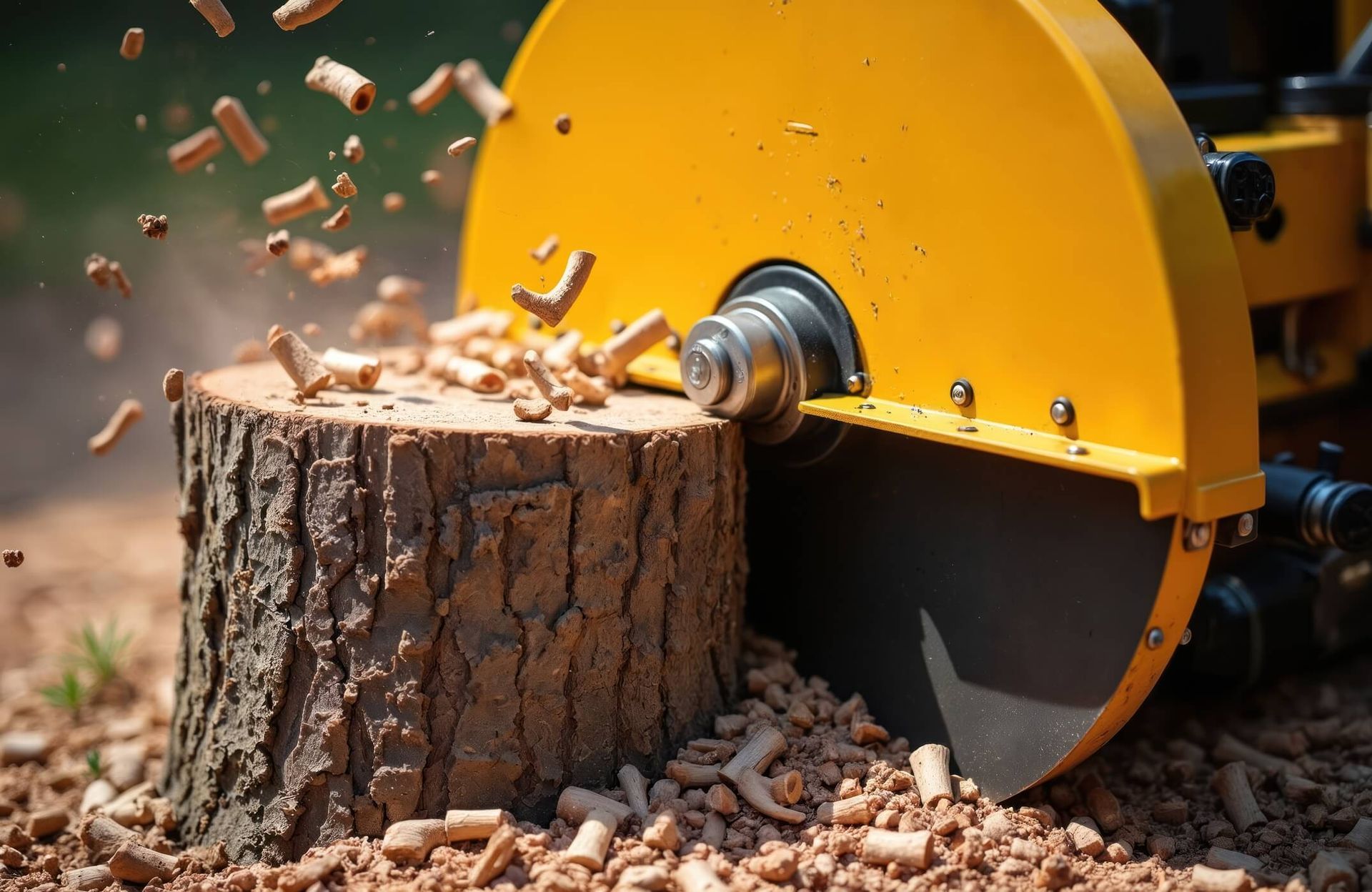
Whether a stump gets ground the same day as removal or on a return visit usually comes down to scheduling and site conditions rather than any rule about the stump itself. Grinding immediately, while equipment is already on-site, is often the more efficient option when the utility locate window allows it and the ground is stable enough. A separate visit makes more sense when the site needs to settle, when other work (fencing, hardscaping, a second trade) needs to happen first, or when the required locate window simply hasn't passed yet. Either approach is reasonable as long as the sequencing is clear before the job starts, which is why it's worth asking directly how a company plans to handle it rather than assuming.
What Comes After Grinding
Once the stump is ground, most of the leftover wood chips and grindings need to be cleared or worked into the soil before any replanting or seeding happens, and the ground around the old stump often needs some topsoil and settling time before it's ready for grass or a new planting. We've covered that next phase in more detail in our guide on how soon after stump grinding you can plant, which is worth a read once grinding is scheduled or already done.
The Bottom Line
A stump doesn't need time to age before it's ready to grind. What it usually needs is a clear, stable site and, in this part of the country, a completed utility locate request. Understanding both of those upfront makes it a lot easier to plan realistically instead of assuming the stump itself is what's setting the clock.
If you've recently had a tree removed and are ready to deal with the stump, SYS Enterprises has served Southern Indiana and Metro Louisville for over 30 years. We handle the scheduling, utility locates, and site prep so you don't have to sort it out yourself. Learn more about our stump grinding and removal services, or call us at (502) 724-6950 for a quote. If the tree is still standing, our tree removal services can get the whole project handled from start to finish.
Frequently Asked Questions
Do I have to wait for a stump to dry out before grinding it?
No. Fresh and older stumps grind about the same. Wood species and root size matter more than how long the stump has been sitting.
Can a stump be ground the same day as tree removal?
Often, yes, if the site is clear and any required utility locate window has already passed. Same-day grinding is common when the removal crew and grinding equipment are already on-site.
Why would I have to wait a couple of days even if the crew is available?
In Indiana and Kentucky, digging or grading below grade requires a utility locate request submitted at least two full business days in advance. Stump grinding, particularly when it involves working through the root system, generally falls under this requirement, which can set the real minimum timeline regardless of crew availability.
Does old, months-old stump grinding cost more or take longer?
Not typically because of age itself. Pricing and time usually depend more on the stump's diameter, wood type, and root spread than on how long it's been since the tree came down.
You might also like